

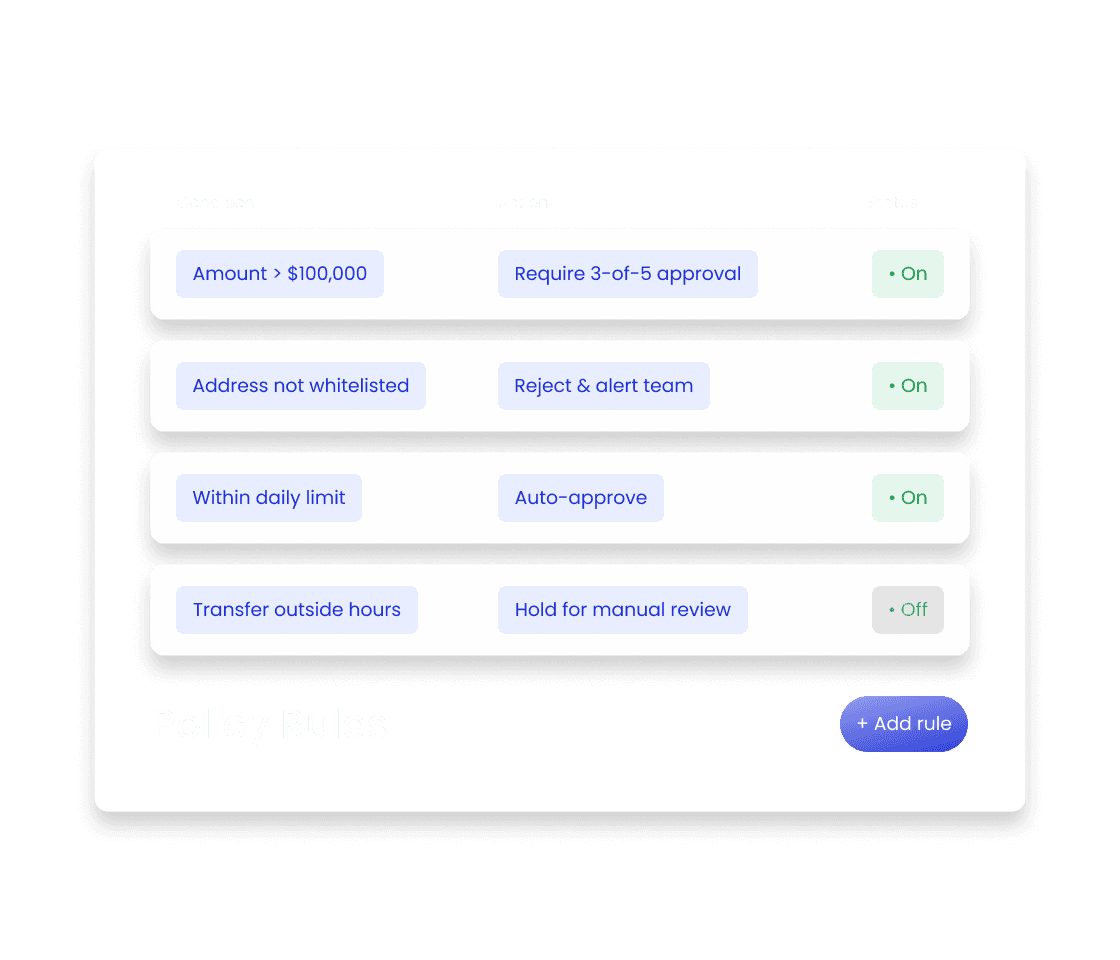
Policy Engine
Your rules, enforced before signing.
Set granular policies for who can move funds, how much, when, and to which addresses. Rules are hardcoded at the infrastructure layer, with no room for app-layer bypasses.
How it works
Every transaction passes through three gates
Set rules for who can move funds, how much, to which addresses, and when — enforced before a transaction is signed.

Transaction submitted
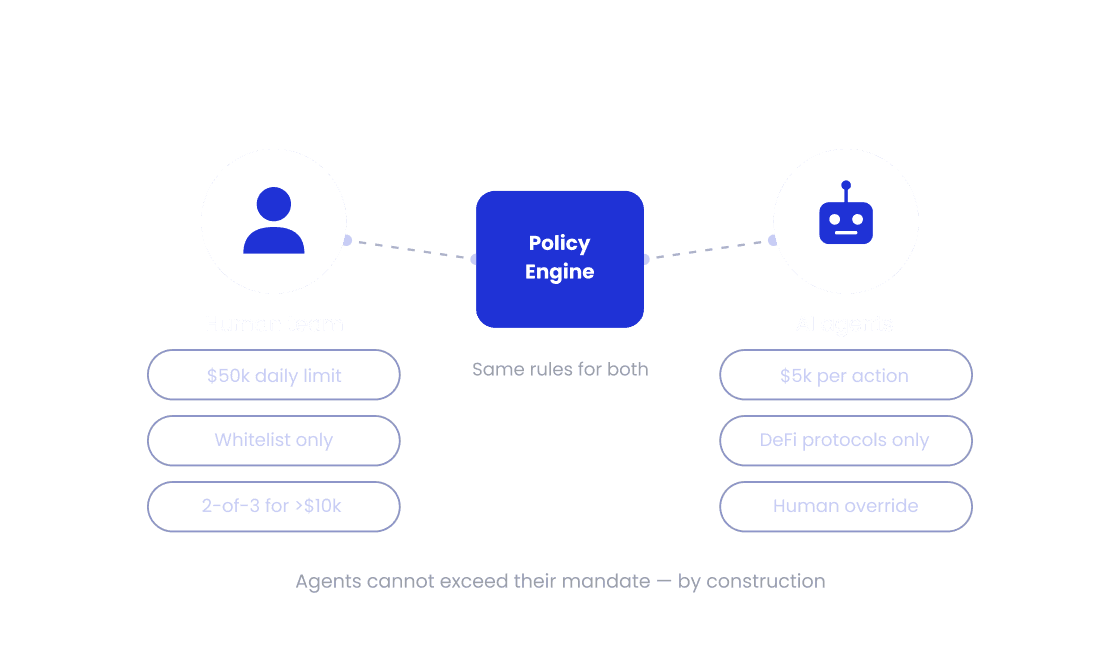
A transaction is initiated — by a user, an automated system, or an AI agent. It enters the policy engine with its full context: sender, recipient, amount, token, chain, and time of day.

Rules run in order
Each rule is validated against the transaction context in your preferred order of priority, guaranteeing strict adherence to your custom controls.

Outcome enforced
Approved transactions advance to the signing layer while rejected transfers are blocked and trigger an instant alert. Transactions requiring further oversight are held until designated approvers confirm them.
One engine, total control
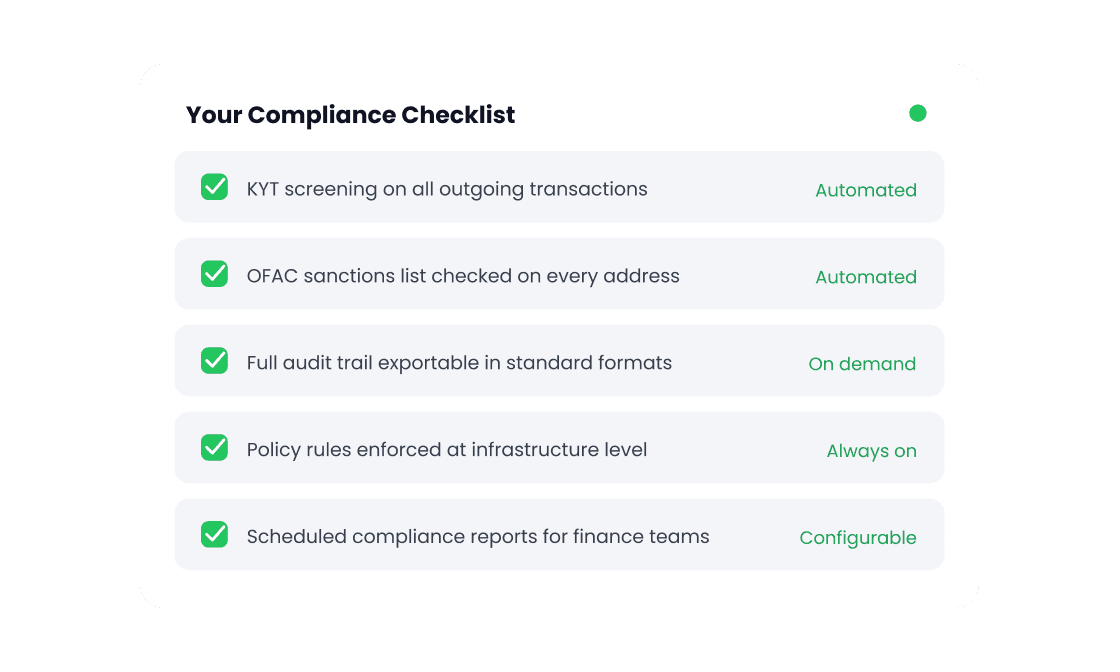
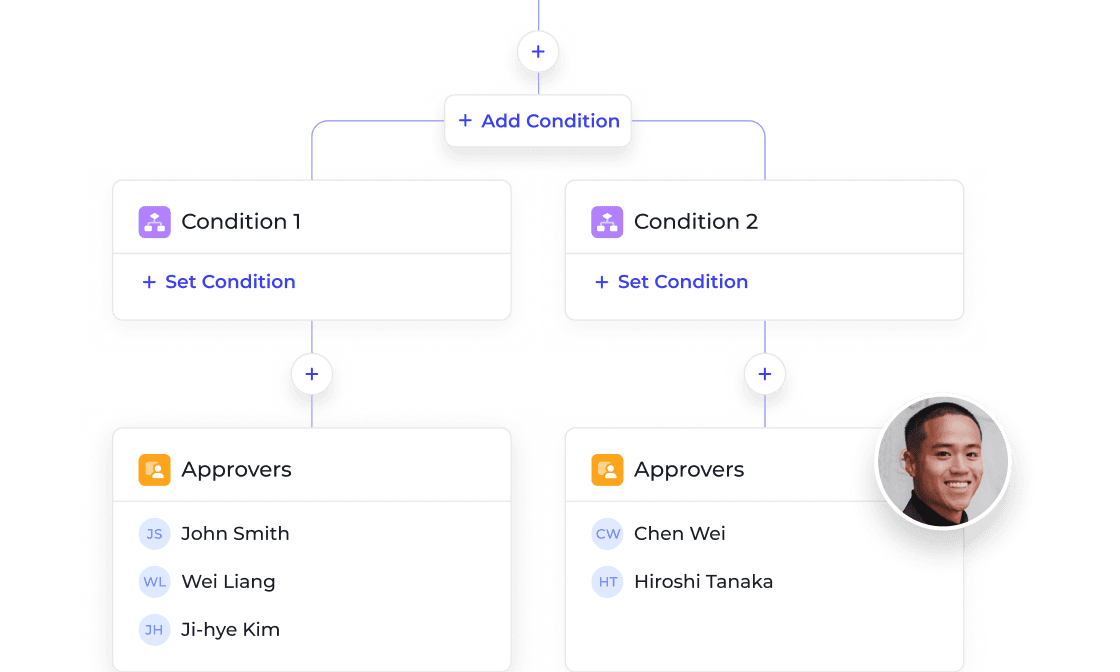
Set per-asset spending limits, daily caps, and velocity controls. Transactions that exceed your thresholds are held or rejected automatically before signing.

High-value transfers can be configured to require sign-offs from designated approvers, such as a CFO, risk officer, or operations lead.
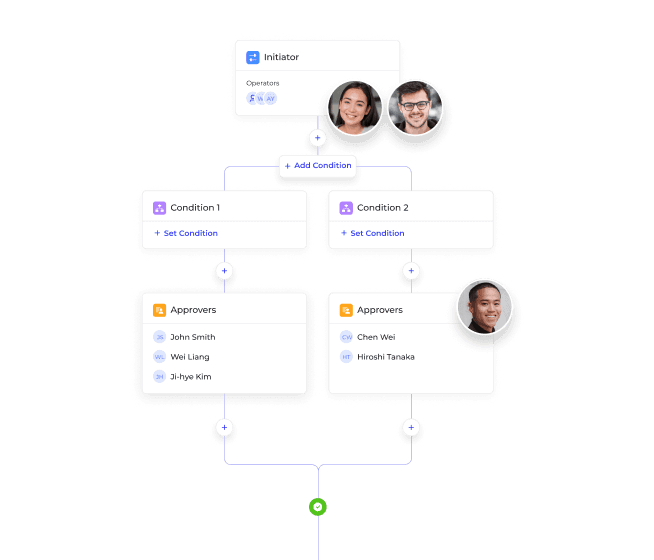
Manage every rule, role, and approval policy from a single console. One engine governs all your wallets and chains, so policy stays consistent no matter where assets move.
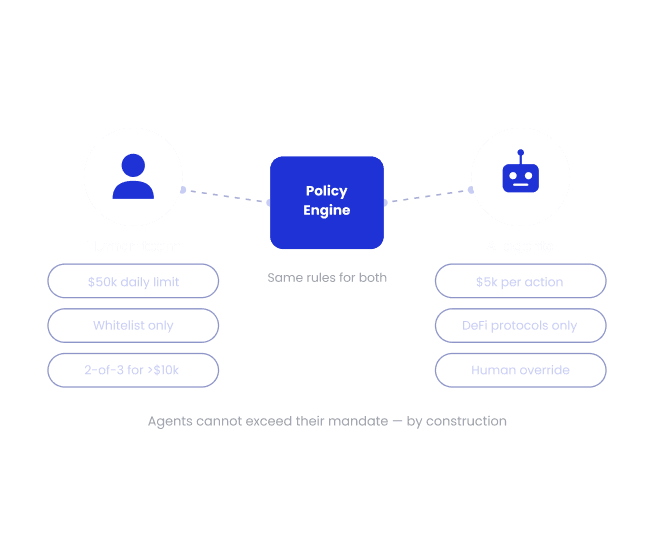
Every control you need, out of the box
Pre-built controls you can combine into policies as granular as your operations require — no custom code.

Velocity caps
Limit how many transactions can occur within any time window — stopping sweeping attacks and unusual automation in their tracks.

Address whitelists
Only permit outflows to pre-approved addresses. New destinations require explicit approval before funds can flow there.

Role-based approvals
Assign approval authority by organizational role. CFOs, risk officers, and operations leads each have defined scope and signing power.

Per-token rules
Apply different policies to different assets. BTC, stablecoins, and DeFi tokens can each carry their own controls and limits.

AML / KYT integration
Leverage on-chain AML/KYT risk data to flag high-risk addresses and prevent unauthorized withdrawals. Custom screening policies can also integrate risk scores from trusted intelligence providers.

Full audit trails
Every policy decision — approval, rejection, or escalation — is logged with full context and exportable for compliance review.
Put the policy engine to the test.